Where Unity Is Strength
Header

Author Archives: admin

We, organisations from across the moral, political and ideological spectrum, including faith groups and secular organisations, write to express serious concern about the UK Government’s ongoing efforts to adopt a non-statutory definition of “Islamophobia”. At a time of rising tensions, deepening mistrust, and urgent social challenges, this move risks fuelling division rather than fostering social cohesion.

We strongly oppose racism and discrimination in all their forms. We also recognise the many benefits of living in a multiethnic and multifaith society. But adopting an official definition of “Islamophobia” will do little to tackle prejudice and much to exacerbate problems by encouraging censorship, identity-based grievance, and the policing of speech.

The proposed definition blurs the crucial distinction between race and religion. Islam is a belief system that, like all others, must be open to scrutiny, criticism, mockery and even condemnation. Equating criticism of Islam with racism misrepresents the nature of both and undermines long-standing principles of free expression.

We have already seen the dangers of this confusion. The term “Islamophobia” has been used to silence legitimate concerns, particularly around issues such as grooming gangs, women’s rights, and religious influence in education. Former Bristol University professor Steven Greer faced life-threatening abuse following baseless accusations of Islamophobia. In Batley, a teacher remains in hiding after showing an image of the Prophet Muhammad during a lesson on free speech, with little institutional support or public defence. Acts of protest such as publicly burning the Qur’an are increasingly framed as “Islamophobic”, effectively reviving blasphemy norms in all but name. Yet blasphemy laws were formally abolished in England and Wales in 2008, and in Scotland in 2021. Labelling religious offence as “hate” risks granting special protections to ideas and beliefs, in direct conflict with democratic principles of open debate.

Far from protecting Muslims from harm, definitions like this often empower self-appointed community gatekeepers and stifle the diverse range of views that exist within Muslim communities themselves. Reformist, liberal, ex-Muslim, and secular Muslim voices are particularly vulnerable to being labelled and excluded.

It also sets a precedent for the creation of similar definitions for other groups, turning public policy into a battleground of identity-based grievance and competing victimhood. This risks fragmenting society further and undermining equal treatment before the law.

For the reasons given above, we urge the government to abandon its endeavour to define Islamophobia; ‘anti-Muslim hatred’ is clear, sufficient and already covered in law.

The Equiano Project

Don’t Divide Us

National Secular Society

Fiyaz Mughal, Founder of Muslims Against Antisemitism

Academics for Academic Freedom

Christian Concern

Hardeep Singh, deputy-director, Network of Sikh Organisations

Free Speech Union

Oxford Institute for British Islam

Scottish Union for Education

Sikh heritage MPs voted against a national inquiry into ‘grooming gangs’, the NSO says this is morally wrong

At the beginning of the year the Conservative party submitted an amendment (attached to the Children’s Wellbeing and Schools Bill) for the purpose to set up a national inquiry into ‘grooming gangs’. It was voted down by 364 votes to 111 votes. Labour has a majority government, and many MPs voted along party lines, and this includes many of the Sikh heritage MPs within the Labour party. 

Indeed, the issue of group-based child sexual exploitation by men of predominantly Pakistani Muslim heritage is an issue that has not only impacted the white-working class (and some middle class) girls in places like Rotherham, Telford and Rochdale – but also Sikh and Hindu communities too. This has regrettably led to vigilante reprisals from a small section of the Sikh community, like in Leicester in 2013, and was a contributing factor that led to major civil unrest between Sikh and Muslim communities in places like Slough in the 1990s. The disorder culminated with the Chalvey (in Slough) riot in 1997, and Fiona Mactaggart – (former MP for Slough) said, ‘the town when I stood [for election] was a troubled place, rival gangs of Sikh and Muslim youth were trying to kill each other on our streets’.

Given the national scale of the problem with ‘grooming gangs’, which some estimate to have been operating in 50 towns and cities across the UK, plus the irrefutable fact that Sikh girls are also targeted by abusers, we believe it is morally wrong for Sikh heritage MPs to have voted against the proposal to set up a national inquiry. They have shown poor judgment, herd mentality and a lack of moral clarity, in what we can only view as a betrayal of victims and survivors. 

The following Sikh heritage MPs voted against the amendment which would have allowed a set-up of a national inquiry into ‘grooming gangs’:

  • Jas Atwal MP (Ilford South)
  • Tanmanjeet Singh Dhesi (Slough)
  • Kirith Entwistle (Bolton North East)
  • Gurinder Singh Josan (Smethwick)
  • Warinder Juss (Wolverhampton West)
  • Satvir Kaur (Southampton Test)
  • Dr Jeevan Sandher (Loughborough)
  • Sonia Kumar (Dudley)
  • Harpreet Uppal (Huddersfield)
  • Nadia Whittome (Nottingham East)

No vote recorded:

  • Preet Kaur Gill (Birmingham, Edgbaston)
  • Baggy Shanker (Derby South)

As reported in the Times, we wrote to the Home Secretary to encourage her and Baroness Louise Casey to look at both race and religion as contributing factors motivating these horrific crimes. We copied the correspondence to Sikh heritage MPs. To date, we’ve had no response. Although we are of the understanding, that privately, at least one Sikh heritage MP has spoken up about the targeting of Sikh girls with Labour colleagues. If only they had the courage to air their views in public. 

From The Sikh Messenger, Spring/Summer 2025

Download your free copy of The Sikh Messenger via the hyperlink below:

Complaint to Radio 4 – Sunday programme with Edward Stourton

The Sunday programme on Radio 4 with Edward Stourton on 12th January 2025 refers to the Hindu Council UK and the Sikh Association UK objecting to the ‘misleading’ word ‘Asian’. In terms of accuracy, for the record, there is no Sikh Association UK that we are aware of, the presenter is likely referring to us – the Network of Sikh Organisations (NSO) who have worked with the Hindu community since 2012, in raising objection to the word ‘Asian’, and our director had a letter in the Times last week which can be read here

Nazir Afzal responds to the question of Hindu and Sikh objections to ‘Asian’ with the following:  

‘I’ve got no problem with what you call it, but I think the Hindu community and the Sikh community (those leaders) need to have a look at themselves as well. Just two years ago Sikh Women’s Aid which is the main body run by women to protect women who are suffering abuse within the Sikh community published their report on abuse within the Sikh community and could you believe it was really really bad; so bad actually that they didn’t want to put their name to it, they reached out to me and said Nazir would you do the foreword for our report, I said why are you asking a Muslim man or British Muslim man to do the report, they said firstly, if we put our names to it they are going to come for us, and secondly we couldn’t find a Sikh man that would put his name to it. As I said, it takes different forms in different communities, but I think British Pakistani men were more engaged in other communities, but in other parts of the country you’ll find a different picture.’[i]

To be clear Sikh Women’s Aid (SWA) focuses on violence against women and girls which is related to domestic, spiritual and sexual violence within the Sikh community. This is different to the subject of the debate which was group-based child sexual exploitation (or ‘grooming gangs’) like in Telford, Rotherham and Rochdale (to name a few), and which has been perpetrated by majority Pakistani Muslim men and the victims have been primarily white working-class girls. 

Indeed, domestic violence (and abuse within faith settings) affects all communities, so Mr Afzal presumably believes the Muslim and Christian communities should also get their house in order on this issue too? Moreover, some domestic abuse from within the Muslim community may well be justified with the interpretation of foundational Islamic texts,[ii] cited by some Imams. The presenter failed to challenge Mr Afzal, firstly in making the distinction between the different issues being discussed, which we believe were deliberately conflated. Second, the presenter should have also been informed of the fact that both Hindu and Sikh communities have also fallen victim of ‘grooming gangs’ too and targeted by men from within the Pakistani Muslim community. The BBC have made a documentary on the issue of British Sikh girls being targeted.[iii] The kidnap, forced conversion, and forced marriage of girls from Christian, Hindu and Sikh communities in Pakistan is well documented. 

Indeed, Mr Afzal did write a foreword (there were several) for SWA’s 2021 report From Her, Kings are Born – Impact and prevalence of domestic and sexual violence in the Sikh/Panjabi Community – authored by Sahdaish Pal and Sukhvinder Kaur. However, it is simply not true the authors did not want to put their name to the report, they did. Second, when Mr Afzal says that no Sikh man would put their name to the same report – again this is simply not true – there were three.[iv] Gurdwara Aid’s Mandip Singh and the late Gurdeep Singh gave a joint foreword, and The National Sikh Police Association’s president – Harvinder Singh Rai wrote one for the report too. So, this needs to be corrected and put on record too. We understand Mr Afzal has not attended any SWA conferences but posted a post on X (formerly known as Twitter) at the time of the 2021 report.[v]

We deserve a right of reply and the opportunity to set the record straight on air ourselves, based on the various inaccuracies, deflection and false information conveyed to the listeners of your flagship programme. 

Network of Sikh Organisations


[i] https://www.bbc.co.uk/sounds/play/m0026tz6

[ii] https://quran.com/en/an-nisa/34

[iii] https://www.bbc.co.uk/news/uk-23921570

[iv] https://www.sikhwomensaid.org.uk/files/Sikh_Womens_Aid_From_Her_Kings_Are_Born.pdf

[v] https://x.com/nazirafzal/status/1462088824763387914

We at the Network of Sikh Organisations UK offer the Sikh community warmest greetings on the auspicious occasion of the birthday of Guru Gobind Singh ji, the tenth Guru of the Sikhs.  

Guru Gobind Singh’s life was one of an unwavering commitment to uplifting ideals; a life dedicated to the pursuit of social and political justice, freedom of belief, and the equality of all human beings, including importantly, the dignity and complete equality of women. The message of his life and teachings carries invaluable guidance for all humanity and is of particular relevance to a world in which near genocide is seen in Gaza, along with continuing suffering in Ukraine and many other parts of the world. Sadly, those fleeing conflict and the destruction of their livelihood are met with active hostility rather than welcome in countries faced with economic uncertainties.   

At such times it is easy to ignore the needs of others. The Guru in applauding Bhai Khanayia looking to the enemy wounded in battle, reminded us of our responsibility even in the most difficult of circumstances, to always look to the needs of others. Sikhs rose to the challenge during the pandemic providing langar and medicines regardless of race, religion or nationality. Today, the need to help others continues not only those suffering in the Middle East, but also closer to home like those requiring refuge or the homeless. 

Guru Gobind Singh in his quest for truth and justice lost his father, mother and four sons but never became despondent or gave up. Instead, he gave us the important Sikh teaching of chardi kala, or eternal optimism.

Today it is important that we reflect on the Guru’s life and teachings. With the spirit of chardi kala, we can also carry ourselves forward to a better future. 

With best wishes for a safe and happy 2025

Indarjit

Lord Singh of Wimbledon CBE 

Director, Network of Sikh Organisations

The Network of Sikh Organisations (NSO) is unequivocally opposed to Kim Leadbeater’s Terminally Ill (End of Life) Bill, as we have been with other previous attempts to give power to the state to control life and death, and rubber stamp what in no uncertain terms is ‘assisted suicide’. The use of euphemisms continues to be deployed by those supporting this controversial Bill, often to soften the reality of what is being proposed here – state sanctioned suicide. This was aptly illustrated in the debate during the second reading of the Bill. A point of order was raised by a Labour MP accusing Danny Kruger MP of using ‘incorrect language’ with his use of the word ‘suicide’. As Kruger rightly clarified, ‘what the Bill would do is amend the Suicide Act 1961. It would allow people to assist with a suicide for the first time.’

As Sikhs we accept that life is a gift of God. A gift which is to be cherished and preserved wherever possible. We are also required to constantly bear in mind the important Sikh teaching of compassion and dignity, which encompasses care for those suffering. From a Sikh perspective, these two considerations are not necessarily incompatible. We look to the example of Guru Har Krishan, our 8th Guru, who helped those inflicted by smallpox during an epidemic. He saw caring for the sick and vulnerable as a sacred duty – he supported the vulnerable and dying with ‘assisted living’. Today, many in the British Sikh community, care for their parents and grandparents and consider it a duty to do so. The emphasis on caring for the vulnerable and elderly, is reflected in the 2021 Census data, where approximately one in three people who identified as ‘Sikh’ are shown to live in multi-family, or multi-generational households, which contrasts with 11.1% of the broader population of England and Wales.

Sikh teachings also advise that the way to real contentment is to forget self and look to the wellbeing of others. A Christian theologian put it in even stronger terms when he wrote: ‘it is the I in the middle of sin that makes it sin’. Indeed, it is the same narrow thinking that leads to the argument that an individual’s life is his or her own, and curtailing life is okay if that’s what the individual wants. The poet John Donne reminds us otherwise when he writes that no man is an island; we are all part of the mainland and death, or suffering impacts others that goes beyond the individual concerned. A person’s decision to end their own life does not end there but has an impact on relatives. It sends the wrong message of trivialising life to wider society.

Although the Bill went to vote after its second reading and passed, we are hopeful it can still be defeated at third reading. We are confident the 30 MPs who voted for the Bill for the sake of further and more robust debate, could vote it down and defeat it. We implore those MPs who voted in favour of the legislation under this pretext, to carefully reconsider their position – and focus on the importance of ‘assisted living’, which means improvement in NHS palliative care services, rather than implementing state sanctioned suicide.

Most remarkably, as things stand, we now understand even if evidence of coercion is established, then a decision by a judge to give permission for ‘assisted dying’ cannot be appealed or challenged. Nor will the friends and family of an individual be informed by a court which has given permission for ‘assisted dying’. In a 2017 case, Lord Justice Sales, said, ‘external pressures might be very subtle and not visible to the court’. We believe this critical aspect is therefore nothing short of an insuperable hurdle, for which there can be no possible safeguards whatsoever. Oddly some proponents of this Bill appear to suggest ‘coercion’ works the other way, where loved ones of those who’ve opted for ‘assisted dying’ in other jurisdictions have attempted to persuade them otherwise. But this is frankly a perverse way to view commitment and care people have for friends and family. Offering love where there is despair, and hope where the vulnerable feel a burden, is the best of humanity, not ‘coercion’!

Notably, not a single disability organisation has come out in support of the Bill, and they are right to be fearful of the implications of this legislation (if passed) will have on life and death as we know it. Disability Rights UK have said they are ‘deeply dismayed’ by the passing by MPs at the second reading and see this as ‘a profound betrayal to disabled people across the UK’. We at the NSO, stand in solidarity with them. If this Bill passes, we would have crossed the rubicon, where death is considered an option for those who feel like a burden to society. Moreover, we’ve seen how in other countries ‘assisted dying’ legislation gradually expands to other vulnerable groups. In Canada this will include those with mental health by 2027, and Medical Assistance in Dying (MAID), has already been an option for social reasons, like for the homeless and those living in isolation.

If this Bill passes, the inevitable expansion, or ‘slippery slope’ to other vulnerable groups here, is therefore extremely perturbing to us. Indeed, there will be legal recourse for this expansion to other vulnerable groups, based on the Human Rights Act 1988, which prohibits discrimination. We believe this Bill demeans society and will pressurise the vulnerable to take their own lives. We sincerely hope our serious concerns and faith led preference for ‘assisted living’, as opposed to state sanctioned suicide, is given careful consideration by MPs at committee stage.

Network of Sikh Organisations

Cc Kim Leadbeater MP

Cc Sikh heritage MPs

CC Danny Kruger MP

[ENDS]

The Sikh Messenger – Autumn/Winter 2024

November 25th, 2024 | Posted by admin in Current Issues - (0 Comments)

We were delighted to celebrate the unveiling of our Director Lord Singh of Wimbledon’s portrait in the River Room in the House of Lords earlier this week. The portrait by Satyabrata Karmakar who is an award-winning artist from Kolkata, will be joining the Parliamentary Art Collection later this week. Lord Singh’s portrait is the first of a turban wearing Sikh to join the Parliamentary Arts Collection, an addition to a collection which includes images of other leading Parliamentarians, Prime Ministers, Speakers of the House of Commons and Lord Chancellors, as well as portraits of monarchs.

We share our Director’s full speech from Monday evening:

‘Thank you, Richard very much for those very kind words. I approached you in response to the Sikh community chasing me again and again for some portrait that a turban wearing Sikh had been recognised. 

I got a friend a little surprised and worried when I told him about tonight’s event. I said that I had been framed, would be publicly unveiled and then hung in a prominent place as an example to others!  I sometimes get carried away by my odd sense of humour.

Let me unveil myself a little. I was appointed in 2011, I made clear I didn’t want to be a token Sikh and would devote myself to providing a Sikh perspective on social justice, gender equality and importantly in today’s world, respect for different beliefs. Our relations with different communities should be one of respect, sadly that is not always so, today. The Sikh Gurus went out of their way to show the importance of that respect.

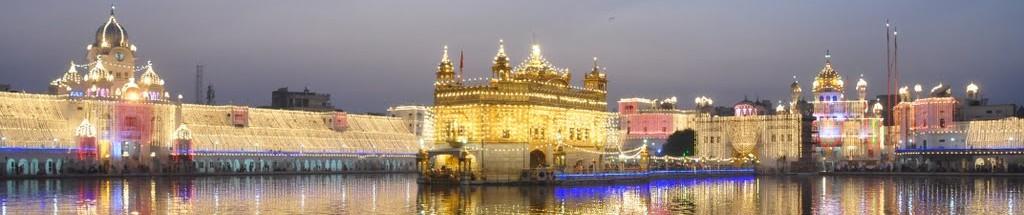
The Sikh holy book the Guru Granth Sahib contains writings of not only Sikh Gurus, but also Hindu and Muslim saints, because they wanted to emphasise, we share important truths. At the same time the Golden Temple in India has four doors, a door on each of its four sides to symbolise a welcome to anyone from any geographic or spiritual direction. Sikhism stresses that our different faiths are not mutually exclusive as some would have us believe but are like paths up a mountain leading to a greater understanding of life itself. Paths that frequently cross and merge to give us a heightened understanding of common imperatives for political and social justice. 

Since my appointment, and before that in 35 years broadcasting on BBC’s Thought for the Day, I have spoken of important commonalities that unite our one human family. My more than 300 spoken contributions in the Lords, have been generally well received. Lord Tebbit once got up after I had spoken, to say if there is any sort of trouble anywhere, the safest place to be is with a group of Sikhs.

But it’s not always easy to go on about our one human family in today’s fractured world, I recently thought I should wash my mouth out after daring to suggest that Palestinians were also human. But most people are happy with my speaking from a Sikh perspective, and I will continue doing so to the best of my ability.

The portrait before us is not only an honour for myself and my family, but also for the wider Sikh community both here and abroad, who’ve been chasing me non-stop. It’s also an indication of how far the UK has come in recognising the contribution of other communities to the life of this country. I’d like to conclude by giving my thanks to the Lord Speaker, Melissa Hamnett Director Heritage Collections, my good friend Lord Faulkner – Chair of the Lord Speaker’s Advisory Panel, Dr Katy Barrett & Grace Saull and particular thanks to Malika Chanda of daughter.com and her talented artist Satyabrata Karmakar in Kolkata, for their kindness and endless patience in producing the portrait before us.

Finally, my thanks to you all for attending and making this evening so special.’