Where Unity Is Strength
Header

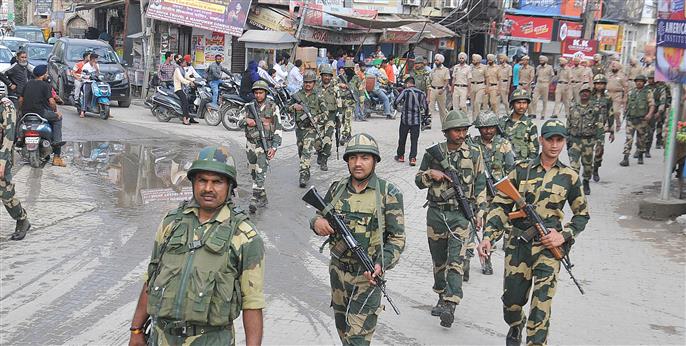
India’s clampdown in Punjab is not only a threat to the state, but to democracy itself

March 25th, 2023 | Posted by admin in 1984 Sikh Genocide | Current Issues | Human Rights - (Comments Off on India’s clampdown in Punjab is not only a threat to the state, but to democracy itself)

The head of Waris Punjab De – Amritpal Singh became a practising Sikh only recently and has been campaigning stridently for Khalistan. Some of his followers attacked a police station where one of their associates was being held.

Indeed, freedom of speech or discussion should be a fundamental right, but if he or any of his followers have broken the law, then the Indian authorities are within their rights to pursue and investigate them for alleged criminal behaviour.

However, instead learning from Indira Gandhi’s action against Sikhs to boost her standing with a bigoted majority, the government has cynically ordered the clamp down against all Sikhs in Punjab. Indian authorities have been arresting and raiding the homes of human rights activists, with internet blackouts, social media crackdowns, and misinformation being spread across national news by pro-Modi media. Twitter accounts of prominent Sikhs overseas (including politicians in Canada) highlighting India’s record of human rights violations as well as the state’s current clampdown have been censored in India. Respected Indian journalists have also been censored, with the Asia Desk of the Committee to Protect Journalists raising their plight, and journalists overseas have been sent threatening messages for daring to talk about what’s happening.

The state has invoked Section 144 of the Indian Code of Criminal Procedure to reduce gatherings in parts of Punjab, of four or more people and threatening its citizens with charges of rioting if this code is broken. These are draconian measures, which only serve to tarnish India’s reputation as the ‘world’s largest democracy’. Needless to say there have been mass arrests.

No reason has been given for why these draconian measures have been implemented, whilst concerns are of course amplified by India’s reputation of conducting torture, extrajudicial killings, and fake encounters. The collective memory of ‘Operation Woodrose’ post 1984, which targeted many thousands of innocent youth and civilians in Punjab under the pretext of quelling Sikh ‘militancy’ is etched in the psyche of Sikhs worldwide. We only have to look in the rear-view mirror of history to understand why Sikhs are fearful.

Many Sikhs abroad have family and friends in Punjab and fear for their safety and wellbeing. The suspension of civil liberties in a nation which prides itself on being a democracy, isn’t just a threat to the people of Punjab, but to democracy itself.

In the beginning of 1984, the Congress government was trailing badly in the opinion polls, yet went on to win a record majority as a result of its appeal to majority bigotry. The BJP is hoping that it will reap a similar dividend in next year’s election.

A word on Khalistan

Why would Sikhs living peacefully in India want a separate state? The issue did not arise until the increasing discrimination against Sikhs culminating in the genocide of 1984.

In 1984, we all shouted Khalistan, as a shorthand way of saying, ‘we hate the action of the Indian government’. Today some are saying it again following recent action in Punjab. The reality is that a separate religious state, like Pakistan, giving Sikhs controlling power, is not only geographically impossible but also against the teachings of the Gurus who taught equal rights for all. Khalistan is a place where Sikh values of equal treatment for all human beings – justice, compassion, and selfless service prevail.

The Khalistan we must strive for is the spread of these values throughout India and further afield.

[Ends]

Network of Sikh Organisations

It is well documented and admitted by the BBC that they tried to prevent our Director, Lord Singh, speaking on Thought for the Day (TFTD) about Guru Nanak, the founder of the Sikh faith. He was also pressurised to minimise the contribution of Maharaja Ranjit Singh in promoting harmony and respect between faiths. Unbelievably, after a script of a talk on the martyrdom of Guru Tegh Bahadur had been agreed with the producer of the day, he was asked late in the evening to scrap it and talk about something else. He stood his ground and said that freedom of belief was important to the world of today, and he made it clear that if he was not allowed to talk about Guru Tegh Bahadur, there would be an empty chair in the studio next morning. Faced with this, the producer agreed to the talk going ahead. It was well received.


Our Director complained about the above, and other attempts to belittle Sikh teachings, and in the absence of an assurance that this would stop, he left the TFTD slot after 35 years of broadcasting which won him acclaim from all sections of society. His departure made front page news in the Times and was also the subject of an editorial highly critical of the BBC attempt to censor the tolerant and compassionate contributions of a nationally recognised broadcaster. Thousands of Sikhs signed a petition protesting the BBC attack on Sikh teachings, but to no avail.


Jasvir Singh, an occasional presenter on TFTD chose to remain silent during this flagrant attack on Sikh teachings. He was duly rewarded for his loyalty to the BBC, and made ‘the main Sikh contributor’ on TFTD. The BBC have now rewarded his silence during the attack on foundational Sikh teachings, giving him coverage on the BBC Radio 4 programme – Beyond Belief. They have promoted Jasvir’s gay identity and civil marriage to a non-Sikh. Jasvir tells the BBC that he and his husband received a blessing from a granthi, but went on, ‘could we get married in a gurdwara, sadly the answer was no’, indicating that’s what the couple had intended. The presenter then asks, ‘so why couldn’t Jasvir and his husband Nick have a wedding they wanted within the faith tradition that means so much to Jasvir?’


Sikhism does not condemn homosexuality and Jasvir is of course entitled to choose his lifestyle, but its peculiar that the BBC have described him as a ‘devout Sikh’. This is because Sikhism teaches the Sikh marriage ceremony or Anand Karaj, should be between a man and a woman for their mutual wellbeing, the upbringing of children, and service to the wider community. The Anand Karaj is not an inter-faith or same-sex ceremony.


It is a matter of real concern that after our Director presented the above view of marriage in Sikhism, with appropriate scriptural references to the BBC, it vainly sought others in the community who were unable to effectively articulate that Jasvir’s position on the Anand Karaj ceremony is not consistent with Sikh teachings. Whilst we condemn the threats that Jasvir has received for his sexuality from a fringe minority, Sikh teachings on Anand-Karaj are clear.


Urgent need


Religious broadcasting must have safeguards against attempts by Christian or other producers to belittle, smear or trivialise the teachings of other faiths. There is an urgent need for an Advisory Body to ensure personal prejudices of producers are not allowed to dilute mainstream teachings of other faiths, which should be respectfully and accurately presented in religious broadcasting.

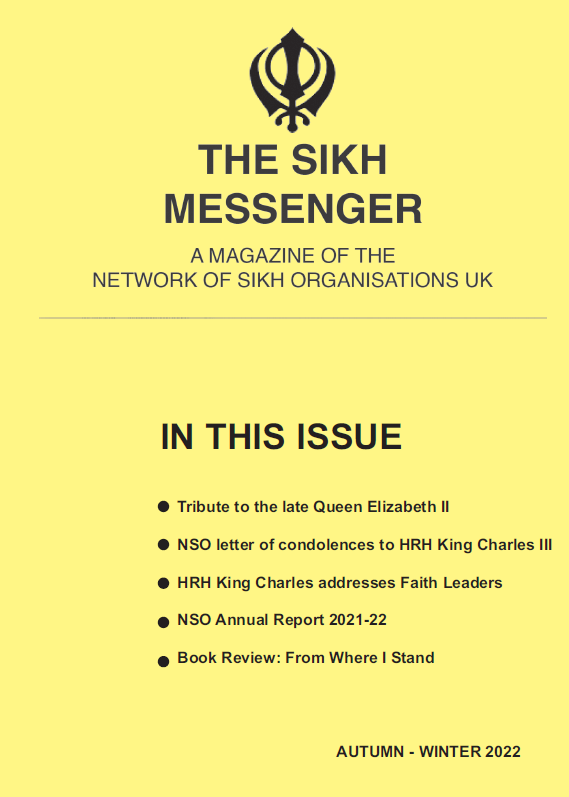
The latest edition of The Sikh Messenger is now available:

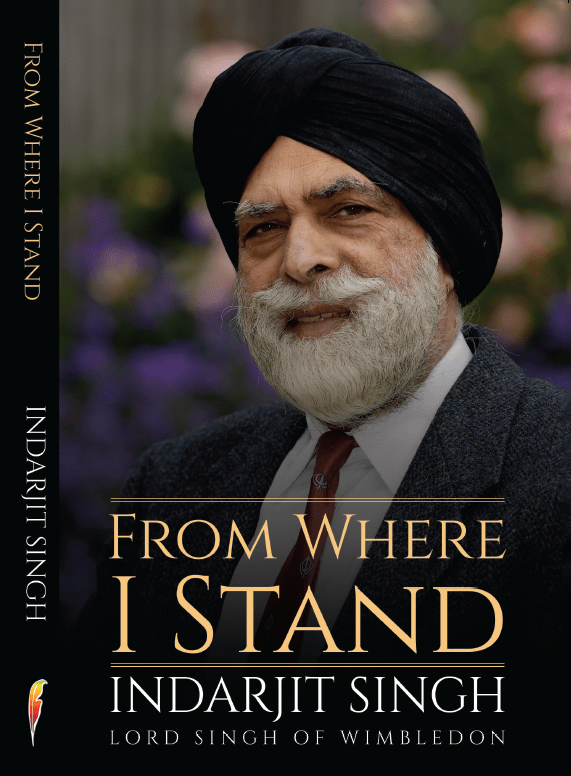
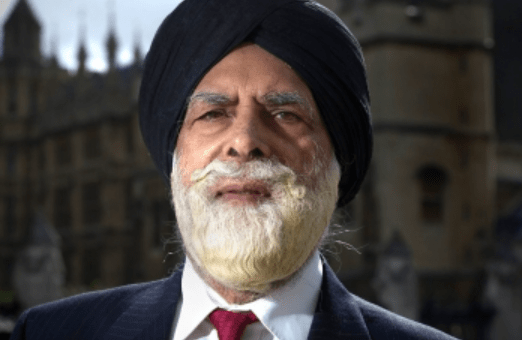
Indarjit Singh, or Lord Singh of Wimbledon is widely recognised as the de-facto leader of Britain’s Sikh community. When being introduced by the British Ambassador to Estonia, he was referred to as ‘the man who brought Guru Nanak to the Breakfast tables of Britain’, for his inspiring broadcasts on BBC Radio 4. But what’s the story behind Singh’s journey towards faith leadership? From Where I Stand reveals how his newly qualified father, Dr Diwan Singh, rallied against British rule in India, by bandaging up Sikh protestors pledged to non-violence, being beaten by police. It was, a selfless and courageous act, which led to the family’s eventual exile from Punjab to Britain. After gaining further medical qualifications Diwan Singh set up as a general practitioner overcoming prejudice of a pre-war Britain. His dynamism led him to become president of one of Britain’s first Sikh temples in Shepherds Bush, London, as well as a leading figure in the movement for India’s freedom from British Imperialism. He was popular amongst Hindu, Sikhs and Muslims – the Singh family had distinguished guests meet them at home, not least Krishna Menon who became India’s first High Commissioner to the UK after independence in 1947; and Udham Singh who later famously took revenge for the Jallianwala Bagh massacre.

Indarjit, one of 4 siblings (along with his elder brothers Gurbachan, Surinder and younger brother Jagjit), was destined to follow in his father’s footsteps of leadership. As a child growing up in wartime Britain, Indarjit was rebellious from the start. On his first day at school, he chose to avoid walking up the stairs, choosing to climb up a sandy adjacent slope – to the chagrin of his teacher and parents. During VE celebrations he went to the green grocer’s shop owned by a Mr V Pendry (a name he later used as an alias for his writing criticising the actions of the then Indian government). Referring to a 13-year-old Indarjit, the shopkeeper said, ‘you lot must be Germans because you’re not celebrating’, to which Indarjit responded in his best German accent ‘Ja’, eliciting raucous laughter amongst customers in the shop. This early sense of humour became a characteristic trait.

From Where I Stand is punctuated with seminal moments, like the time he met Kanwaljit (Lady Singh of Wimbledon) visited the pyramids of Egypt on camelback whilst on honeymoon, and the birth of the couple’s daughters. It follows his distinguished career in the mining industry. He then worked for the contractor Costain whilst also studying for an MBA. He then moved to the ‘people’s republic’ of Hackney as a management consultant. The book reveals Singh’s politics were neither left nor right, despite Bernard Weatherill MP (who later become Speaker of the House of Commons), trying to persuade him to join the Conservative party, and regardless of working as a civil servant in a far-left leaning council. During the passage of his career, Indarjit found that he was increasingly writing about religion and politics, and increasingly in the public eye, appearing on mainstream television. One TV programme called From Where I Stand was about his challenges and priorities as a Sikh in the 1980s.

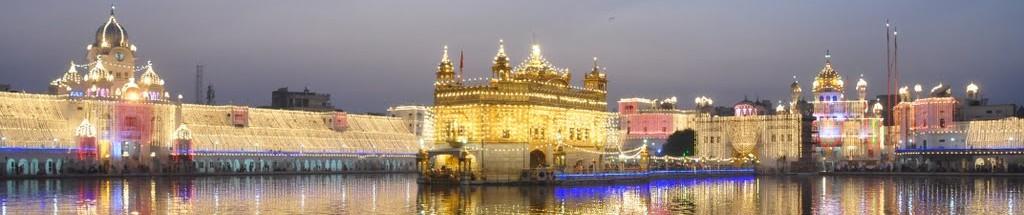
It was events in India in 1984 which led Singh to take early retirement, something he was able to do because of some shrewd investments. He later set up the Network of Sikh Organisations in 1987, a leading Sikh charity for which he remains the director – and one which works for the betterment of British Sikhs. Indarjit became a leading voice of protest against the anti-Sikh genocide, which started with the military assault on Sikhism’s holiest shrine – the Golden Temple by the Indian Army in 1984.

When writing in India about earlier discrimination against Sikhs, he used the alias ‘Victor Pendry’ (his wife Kanwaljit had heard of Mr Pendry, before she met Indarjit). Now, in 1984 in the UK, writing in his own name, he challenged the then Indira Gandhi government with articles like one in the Guardian on India’s atrocities against Sikhs titled: ‘Gandhi Speak that cloaks the murderous truth’. Singh set up the Sikh Messenger promoting interfaith understanding and remains the editor today.

He has been widely celebrated for his contribution to British society and became a household name for his contributions to BBC Radio Thought for the Day. He has advised former Prime Minister’s like Gordon Brown and Tony Blair and helped set up the Lambeth Group of Faith Leaders to advise on ‘Values for the New Millennium’. A couple of years after receipt of a Broadcasting Gold Medallion, he was awarded the UK Templeton Prize for Promoting Religious Understanding – the only Sikh to have received this honour. He is one of the co-founders of the Interfaith Network for the UK and nominated as the ‘people’s peer’ in a poll of Radio 4 listeners (second only to Bob Geldof) and made a life peer in 2011.

From Where I Stand includes a selection of TFTD’s transcripts – a sentence from one perfectly sums up the core motivation of crossbench peer Lord Singh of Wimbledon – ‘…as a Sikh, I believe our own sense of wellbeing is directly proportional to the amount of our life we devote to helping those around us.’

From Where I Stand is uplifting and inspiring, and a good read for anyone interested in better understanding our fellow human beings and promoting a cohesive society.

The book can be ordered via here or via Amazon.

To order a review copy or organise an interview please reply to: info@nsouk.co.uk

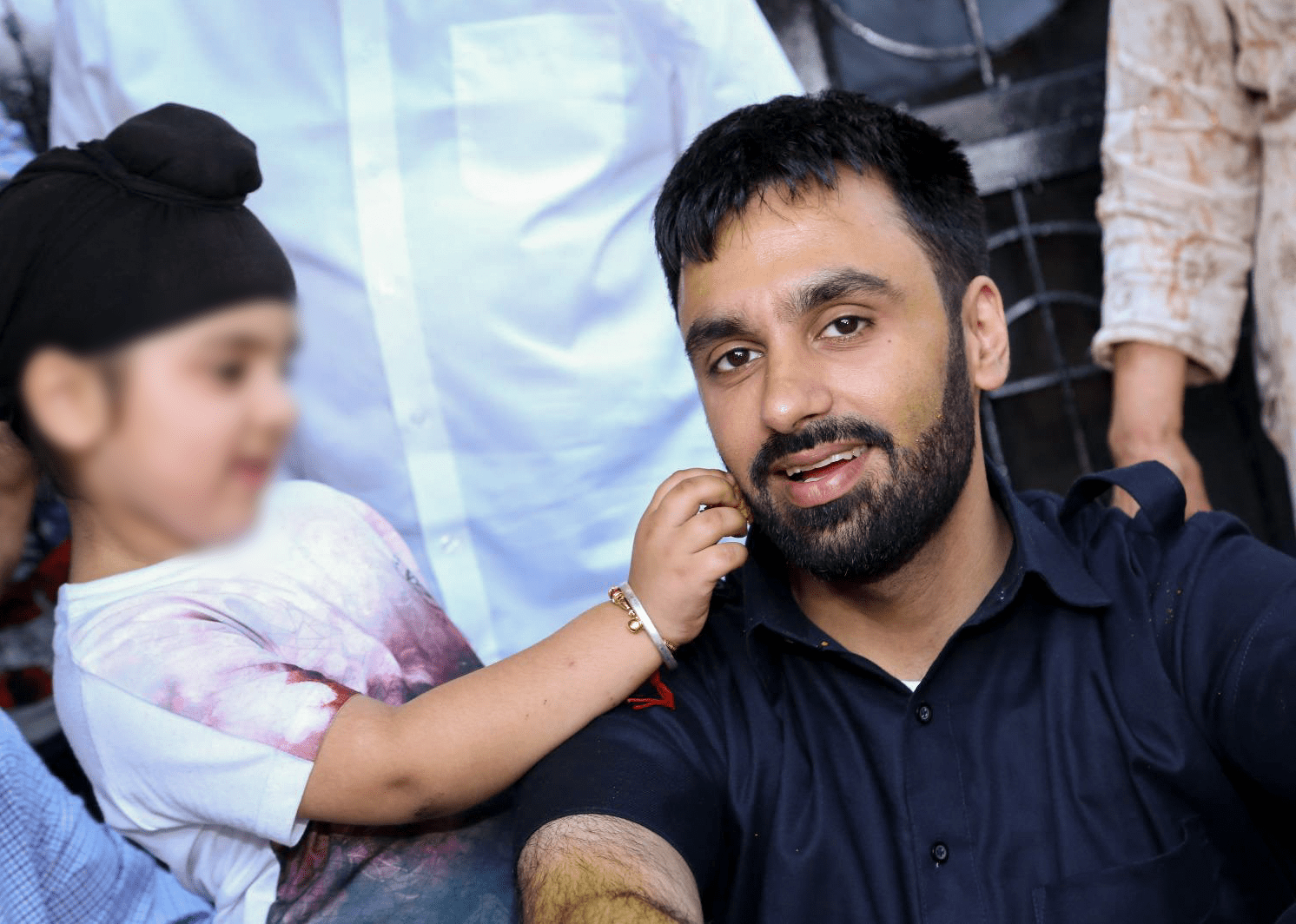
There is increasing disquiet about new developments in the case of Jagtar Singh Johal.

Human rights group Reprieve point to the unearthing of evidence that the British intelligence agencies, MI5 and MI6, may well have contributed to Johal’s detention and torture by tipping off the Indian authorities, this they say is made worse when there was indeed a real risk that Johal could be tortured or face the death penalty in India.

At the point of detention Johal was a British blogger involved with a website speaking out about human rights violations against Sikhs in India. The site for which Johal translated for – neverforget84, is in fact a reference to the year Indian troops stormed Sikhism’s holiest site, the Golden Temple. Under the pretext of flushing out ‘militants’ many innocent pilgrims were brutally murdered by the Indian army. We have every right to speak up against human riots violations in India and elsewhere – but it maybe that Britain’s spy chiefs at the behest of the British government don’t quite see it that way?

If what is alleged transpires to be true, then this is the second betrayal of Sikhs by British authorities who were revealed to have send an SAS officer to advise India in the run up to Operation Bluestar. When our director raised the persecution of Sikhs by India in 1984 with a senior government official here, he was told about the consequences speaking up would have on Anglo-Indian trade deals. In short, the British government dispensed with human rights in order to secure lucrative military contracts with India, in particular the Westland helicopter deal. In 1984 a cabinet secretary remarkably told Lord Singh, ‘Indarjit, we know exactly what is going on, it’s very difficult; we’re walking on a tightrope: we have already lost one important contract’.

If spy agencies did tip off India on Johal, perhaps Anglo-Indian trade is the motivation, but if so, what would that tell you about Britain’s priorities?

Johal’s UK lawyers Leigh Day have lodged a claim in the high court against the Foreign Office, Home Office and attorney general, which alleged that the intelligence services tipped off India despite the risks of torture. Of course, this means the government has not commented on the allegations and won’t do so whilst the case takes its passage through the courts.

Meanwhile a statement from the all-party parliamentary group (APPG) on extraordinary rendition said that if substantiated, the allegations suggested the UK had facilitated arbitrary detention and torture.

It’s co-chairs, Stephen Timms and Andrew Tyrie, said: ‘The government’s own principles on torture – designed to ensure that the UK is not involved in it – appear to have been breached. Parliament and the public cannot have confidence that the UK is not involved in kidnap and torture.’

Lord Singh of Wimbledon, Director of the Network of Sikh Organisations UK, and a Vice-Chair of The APPG for International Freedom of Religion or Belief said:

‘The UK recently hosted an international conference to emphasise the importance of freedom of belief throughout the world. Its claim to be a world leader in promoting freedom of belief and freedom of expression will be seen to be hollow if it is found to acquiesced in yet another betrayal of the Sikh community’.  

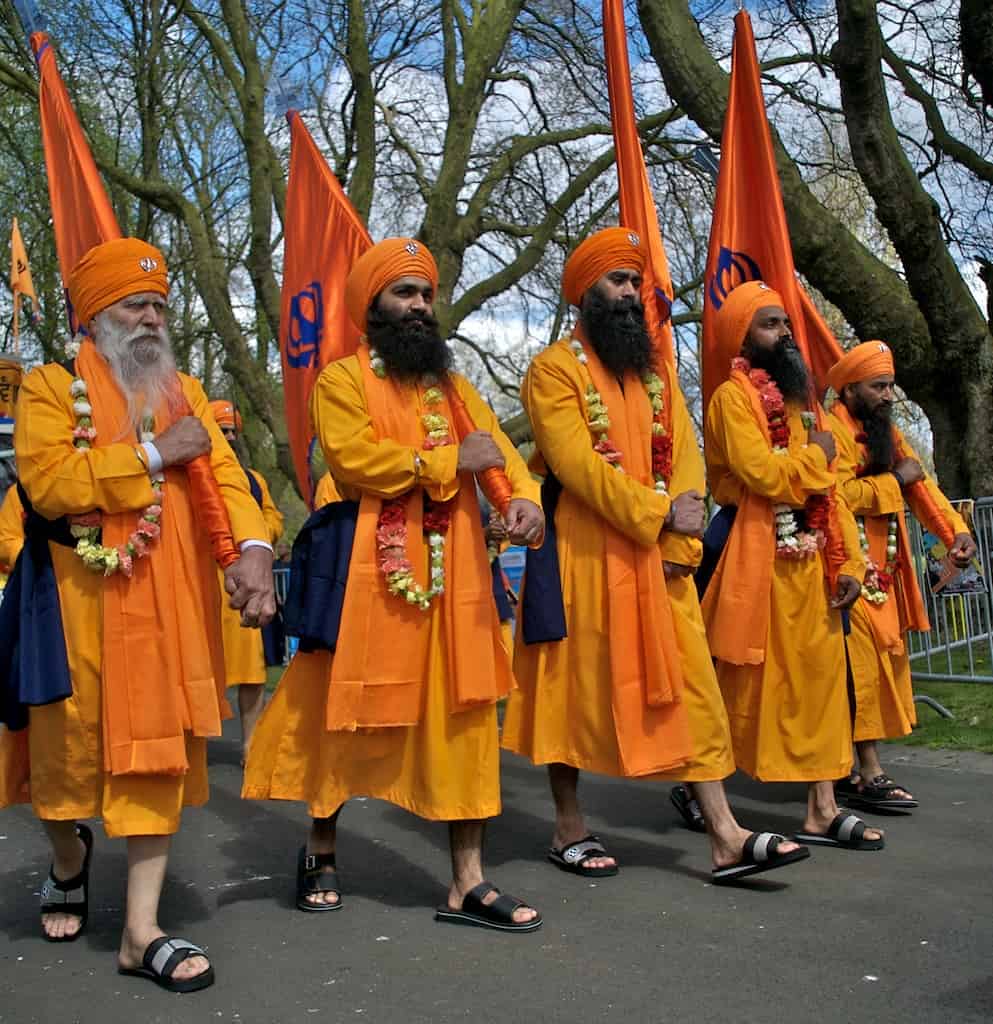
Image credit: Michael Clark CCLicense

Vaisakhi, the day of the creation of the Khalsa, is one of the most important festivals in the Sikh calendar with colourful processions, bhangra dancing and displays of gatka martial arts. It is a time when we remember the courage of the five Sikhs who, in response to Guru Gobind Singh’s call, showed their readiness to give their lives for the inspiring and egalitarian teachings of the Gurus. It’s a powerful message relevant to both Sikhs and non-Sikhs in the world of the 21st century.  

At Vaisakhi, Sikhs are required to pledge themselves to reflect on and uphold uplifting key Sikh beliefs. Let us remember them together. First there is belief in One God, the Creator of all that exists. Sikhs see different religions as different paths to God which should all be respected. This respect extends beyond mutual tolerance to a readiness to give our life for others to worship in the manner of their choice, as exemplified by Guru Teg Bahadur. Sikh teachings stress that no one religion has a monopoly of truth and are critical of those who argue that theirs is the only way, or that theirs is the final revelation. The Gurus also criticised all notions of caste or race in our one human family, and emphasised the dignity and full equality of women.

In Europe after the French revolution in 1789, the cry was for ‘liberty, equality and fraternity’. Nearly a century earlier, Guru Gobind Singh taught the same ideals, to which he also added the important need for humility.

Today we should pledge ourselves to eschew all factions in our community and unite as one in promoting these teachings for the benefit of our children and the wider world.   

Waheguru ji ka Khalsa; Waheguru ji ki Fateh

Lord (Indarjit) Singh of Wimbledon

Dear Khalsa ji,

Waheguru ji ka Khalsa; Waheguru ji ki Fateh.

As we leave 2021 and enter 2022, it is important that we look closely at the forces and pressures that resonate in the Sikh community and reflect on how these help or hinder us in living true to our Gurus’ teachings.

The Challenges

The Sikh religion consists primarily of the teachings of the Sikh Gurus enshrined in the Guru Granth Sahib.

Our Gurus experienced several challenges to their leadership from false claimants to the Guruship seeking to use the popularity of Sikh teachings to further their own selfish interests.

Guru Gobind Singh was acutely aware that these challenges would continue after him and gave us his far-sighted injunction ‘Guru Manio Granth’. That is that we should shun those who try to bend Sikh teachings for their own ends and follow the teachings of the Guru Granth Sahib as we would a living Guru.

The Sikh Gurus incorporated writings of Hindu and Muslim saints in the Guru Granth Sahib to emphasise that no religion has a monopoly of truth. In the same way, leading Sikh scholars who compiled the 1945 Sikh Rehat Maryada also accepted the authenticity of some writings, popularly attributed to Guru Gobind Singh found in the misleadingly titled Dasam Granth (a 19th century compendium of mostly amorous exploits of gods and goddesses compiled by a Brahmin called Chiber).

PRIORITIES FOR 2022

As Sikhs we must heed Guru Gobind Singh’s clear warning about false gurus, and totally reject the siren call of sants and babas, distorting and offering questionable short cuts to the disciplined life taught by the Gurus.

As a community we must also be aware of political lobbyists here in Britain, who push an agenda which stands in contradiction to the uplifting teachings of our Gurus. Sikhism is a global world religion open to all, irrespective of race, class or any other background as the Gurus rightly intended. Those who continue to tell us we are part of some kind of ‘ethnic’ group, must be challenged and their arguments strenuously refuted at every juncture.

On the international front the NSO has supported the Indian farmers’ right to peacefully protest and briefed MPs on the developments since the farmers’ uprising against laws which not only disadvantaged them but risked their very livelihoods. We will continue to support them.

There is much work to be done, we have worked tirelessly in many areas including helping Afghan Sikhs, making sure Sikhs are included in the hate crime debate, and fighting for our right to freedom of expression. On the latter we were part of a coalition of free speech defending groups pushing back on elements of the draft Scottish Hate Crime Bill – now the Hate Crime Act. With our coalition of partners in Free to Disagree, we managed to defend free speech and get an amendment in the Bill, to allow people to freely discuss religion without censorship or fear of criminal proceedings. The fight for minority rights has been another aspect of our ongoing work, and we continue to collaborate with groups including The APPG for International Freedom of Religion or Belief to both challenge and shine a torch on those who persecute minority faiths overseas.

THE ROLE OF SIKHISM IN 2022 AND BEYOND

The Sikh religion is a strong faith rooted in compassion and common sense and has nothing to fear from discussion and questioning which can only make its teachings clearer and stronger. Our Gurus were far-sighted human beings who far from claiming special powers, warned us against superstitious beliefs and idle speculation about peripherals of belief.

Our responsibility as Sikhs is to live true to the teachings of our Gurus and make them known to a wider world which in many ways has lost its ethical direction. Many coming across Sikh teachings for the first time applaud its powerful emphasis on the equality of all human beings, gender equality respect for freedom of belief, and our responsibility to work for a just and peaceful society.

The challenge for all Sikhs in 2022 is to look beyond ourselves, and while being true to Sikh teachings, commit ourselves to living these values in serving the wider community. If we can overcome our petty internal divisions by focusing on the actual teachings of our Gurus and live the life they taught, 2022 can be an important year of unity and fulfilment for us all.

Indarjit Singh CBE,

Lord Singh of Wimbledon

Director, Network of Sikh Organisations (NSO) UK

The UN Climate Change Conference or COP26, is underway in Glasgow this week with heads of nations who face the worst impact of climate change being the most vocal about the consequences of global warming. Rising temperatures are resulting in rising sea levels and extreme weather conditions – and island nations like Barbados face serious consequences with the rise in global temperatures. Barbados Prime Minister Mia Mottley told COP26 that for Island nations like hers a 1.5C rise in global temperature, ‘is what we need to survive’, while ‘two degrees is a death sentence’.[i]

Meanwhile, speaking at the opening ceremony The Prince of Wales told world leaders and delegates that a ‘war-like footing’ is necessary to tackle the climate crisis. He said, ‘I know you all carry a heavy burden on your shoulders, and you do not need me to tell you that the eyes and hopes of the world are upon you’. He talked of the need for countries to come together for a ‘global systems levels solution’.[ii] How nations work together to solve the climate conundrum remains to be seen.

Sikh scriptures tell us, ‘Air is the Guru, Water is the Father, and Earth is the Great Mother of all’ – thus we are encouraged to respect our environment and care for our planet. We have a responsibility like others to work to combat climate change, and initiatives such as EcoSikh are both important and commendable. Whilst considering COP21 and the global climate crisis, we happened to unearth a BBC Thought for the Day broadcast by our Director Lord Singh from March 1989.

Despite being over thirty years old, it is as relevant today as it was then.

[Ends]

16 March 1989 – TFTD Lord Singh (then Dr Indarjit Singh)

There is a saying in Sikhism that ‘We love the gift but forget the giver’. The words are used in a spiritual context, but they are also true of every-day life.

I’ve long forgotten who it was that gave us a present of a re-chargeable electric toothbrush, some ten or twelve years ago. It was never really suited to the sturdy demands of the Singh family – but it did give rise to a most unusual dream.

The dream started with isolated reports about a strange and deeply upsetting noise. Doctors blamed stress and prescribed tranquilisers. But without success. The complaint became more widespread not only in this country but also abroad, and soon became the subject of major world concern.

An international conference of scientists was called to consider the situation, and, after days of intensive deliberation, came up with a solution – specially designed earmuffs to filter out the offending noise:

It worked at first, but soon people complained that the earmuffs were beginning to lose their protection and that the noise was becoming even more distressing.

In despair, a conference of religious leaders gathered and, after much discussion, concluded that the noise was in some inexplicable way, nature’s reaction to the way in which human-beings were treating each other and destroying the environment in the process. I’ll never know what happened next. At that moment, I woke up to the noise of the toothbrush holder on charge in the bedroom.

This strange dream occurred many years before the current concern over the environment. Today it’s not nature that’s making a noise of protest but people all over the world, alarmed by the potentially lethal gap in the ozone layer, the hazards from excess carbon dioxide and other known forms of pollution, too numerous to mention, as well as others still unknown, undoubtedly lurking around the corner waiting to be discovered. It all adds up to the inescapable fact that the human race is proving far too clever and short-sighted for its own good.


[i] https://www.bbc.co.uk/news/live/world-59103425

[ii] https://www.youtube.com/watch?v=xPUFxzD-D5k

Our Deputy-Director Hardeep Singh writes about the controversial Assisted Dying Bill 2021 which will be debated in the House of Lords tomorrow.

The push for legalised assisted dying for the terminally ill is back with a private members’ bill (PMB) introduced by Baroness Meacher. We’ve been here before, with Lord Falconer’s 2013 Assisted Dying Bill, and the 2015 Marris Bill – which was overwhelming defeated by 330 votes to 118 in the Commons. But this issue remains emotionally charged and goes to the heart of medical ethics. It is also true that euphemistic language is often deployed by advocates in framing the narrative – another way of describing ‘assisted dying’, is of course, the grislier ‘assisted suicide’, or ‘assisted killing’. Even euthanasia, which is the act of intentionally ending a life to relieve suffering means ‘good death’. Meacher’s PMB will be debated by more than 140 peers tomorrow, but has it addressed concerns like those highlighted by Lord Tebbit during the passage of Falconer’s Bill, when he said legalising assisted suicide, ‘will be a breeding ground for vultures, individual and corporate. It creates too much financial incentive for the taking of life’?

The Bill states it is designed to, ‘enable adults who are terminally ill to be provided at their request with specified assistance to end their own life; and for connected purposes’. A terminally ill individual having capacity to make the decision and is, ‘reasonably expected to die within six months’, must get the consent of a High Court judge. A witnessed ‘declaration’ is however first to be approved and countersigned by two independent medical practitioners. The doctors must examine the patient (and their medical records) and be satisfied the patient: (i) is terminally ill (ii) has the capacity to make the decision to end their own life; and (iii) has a clear and settled intention to end their own life which has been reached voluntarily, on an informed basis and without coercion or duress. But therein lie the inherent problems with these proposals.

Firstly, the Bill is founded on the premise that it is possible to ascertain the time of death for a terminally ill patient accurately up to six months. How can any doctor possibly know? Could a wrong diagnosis not also be made? Second, it is difficult, if not impossible to be certain if an asset-rich individual who feels, ‘they don’t want to be a burden’, has not been pressurised by relatives (or other ‘vultures’) into deciding to end their life. How to then safeguard the vulnerable at end-of-life? Section 8 of the PMB talks of ‘codes of practice’, but says, ‘The Secretary of State may issue one or more’ – ‘may’ is simply not good enough for what in practice would equate to intentional killing.

Supporters of change like the campaign group Dignity in Dying, argue dying people from Britain are already going overseas to end their lives. They say, ‘The absence of an assisted dying law forces dying people to take drastic measures to control their death’. Statistics, however, show that only 42 people travelled to Dignitas (Switzerland) in 2019, and 24 the year before – the highest annual number since 2002 was 47 in 2016. Given these small numbers, why should a right requested by the few be imposed on the majority in law? Dignity in Dying indicate 84% of the public support a choice in assisted dying for the terminally ill, and in September the British Medical Association (BMA) moved their position from opposition to ‘physician assisted dying’ to neutrality. But despite the polling and the BMA’s shift, which is now on par with the Royal College of Physicians, there remains a groundswell of opposition, not least the voice of Dr Gordon Macdonald, Chief Executive of Care Not Killing.

Macdonald told me, ‘It is disappointing that in the midst of the COVID pandemic, which has seen widespread discrimination against the elderly and disabled people, Baroness Meacher is pushing a dangerous bill that seeks to legalise assisted suicide for terminally ill people.’ He went on, ‘Setting aside the considerable issues with the Bill such as the difficulties in securing an accurate diagnosis, the whole thing seems based on a lie which perpetuates a dog whistle message that those with a terminal or chronic condition will die in pain, that current palliative care cannot help them and simply taking a pill will end their lives peacefully.’

Macdonald said in the US State of Oregon, six in ten people ending their lives in 2019 referred to the fear of being a burden on families as a reason. He warns of where things may head if assisted suicide is legalised here, citing the expansion of those qualifying for an assisted death in other jurisdictions. Several countries have legalised assisted dying, including a growing number of states in the US and Australia – a third attempt to legalise assisted dying is afoot in Scotland too. In the Netherlands, assisted death (legalised in 2002) is not limited to those with terminal illness and less than six months to live – but routinely extended to include the disabled, those with chronic non-terminal conditions and those with mental health problems, like depression and dementia – it also extends to children. Were the law to change, there are no guarantees we would not head down a similar and frankly frightening trajectory.  

Right To Life UK are the secretariat for the All-Party Parliamentary Pro-Life Group. Their spokesperson Catherine Robinson told me all the main disability rights groups in the UK oppose any change to the law – including SCOPE, Disability Rights UK, Not Dead Yet UK and the United Kingdom’s Disabled People’s Council. She said, ‘We are calling on Peers to speak against and oppose Baroness Meacher’s assisted suicide Bill on Friday. The overwhelming majority of doctors who work in end-of-life care continue to oppose assisted suicide, according to the latest BMA survey. They know from experience that what vulnerable people need at the end of their lives is love and support, not offers to accelerate their death.’

Robinson is right. Moreover, if the law were to change, vulnerable people at end-of-life are at risk of interpreting it as, ‘a duty to die’ to alleviate emotional burden, whilst Tebbit’s point on financial incentive remains. Assisted suicide has been debated and rejected in parliament before, it must surely be rejected again.

Hardeep Singh @singhtwo2, journalist and Deputy-Director of the Network of Sikh Organisations