Where Unity Is Strength
Header

To protect the right of Sikhs to follow Sikh teachings
Dear Fellow Sikhs

We at the Network of Sikh Organisations UK (NSO) are writing to you at a critical juncture for freedom of religion and belief in the United Kingdom.

The Threat

In an undisguised attempt to gain Muslim electoral support, the government has introduced a definition of ‘anti-Muslim hostility’ that could prevent Sikhs from living true to Sikh teachings with unequal treatment between faith groups and far-reaching implications for free speech, religious expression, and equality under the law.

Background 

The All-Party Parliamentary Group (APPG) for British Muslims, co-chaired by Baroness Warsi, previously tried to impose a rigid definition of ‘Islamophobia’ that we felt would made it difficult for UK Sikhs to practice their faith and speak about historical truths. In evidence to the APPG, we argued that such a definition would be against the law and discriminate against other communities. Baroness Warsi did not respond to our cogent arguments during oral evidence, but instead promised to send us a copy of her book – which we never received. 

Despite widespread objections, the present government considered the introduction of the APPG definition of ‘Islamophobia’ that they would endorse but would be non-statutory. In the debate, we argued that such a definition would be against freedom of speech and the right of other communities to follow their religions. The then minister Lord Khan reluctantly wrote to us and agreed that the proposed definition of ‘Islamophobia’, was ‘not in line’ with existing legislation and the proposal was withdrawn.

The government then, under former Deputy-Prime Minister – Angela Rayner, appointed a Working Group largely composed of Muslims, to put forward a more acceptable definition of what they called ‘anti-Muslim hostility’. The proposed definition is sadly looser and more discriminatory than the earlier concept of ‘Islamophobia’ and would virtually bar the discussion of essential aspects of Sikh teachings and history on the grounds that these might offend Muslims. The definition risks infringing freedom of religion and speech for other faiths and philosophical beliefs too.

An example of existing pressures on Sikhs to dilute the Gurus’ teachings:

In 2019, the BBC tried to stop a talk on BBC – Thought for the Day – about the martyrdom of Guru Tegh Bahadur, who was beheaded for defending the right of Hindus in Kashmir to practice their own religion against attempts at forced conversion by the then Mughal ruler, on the grounds that the Guru’s stand could be seen as a criticism of Islam. It was successfully resisted at the cost of a broadcasting career.

The proposed definition of ‘anti-Muslim hostility’ would make it even harder to talk about the tolerant teachings of our Gurus.

Pressure in schools to change or soften Sikh teachings

  • A religious education teacher explaining the martyrdom of Guru Tegh Bahadur may hesitate to fully explain the historical context involving Mughal rule, fearing complaints or disciplinary scrutiny.
  • Teaching passages from the Sri Guru Granth Sahib, such as Babur Vani, which describe historical invasions and injustice, may be misinterpreted as ‘negative stereotyping,’ leading to complaints.
  • Teachers may begin to self-censor Sikh history, avoiding key events central to Sikh identity to reduce perceived risk. Classroom discussions may be restricted, with teachers avoiding answering student questions on historical religious conflicts.

Result: dilution of religious education and loss of historical accuracy

Pressure in the workplace

  • A Sikh employee raising concerns about halal meat or non-stun slaughter (based on Sikh beliefs and animal welfare principles) could face a complaint, requiring HR to assess whether this constitutes ‘prejudicial stereotyping.’
  • Employees expressing religious viewpoints in discussions may face internal investigations, even where no law has been broken.
  • Staff may feel pressured to remain silent about their beliefs to avoid risk to their career or reputation.

The challenge to Sikh teachings of equality and respect

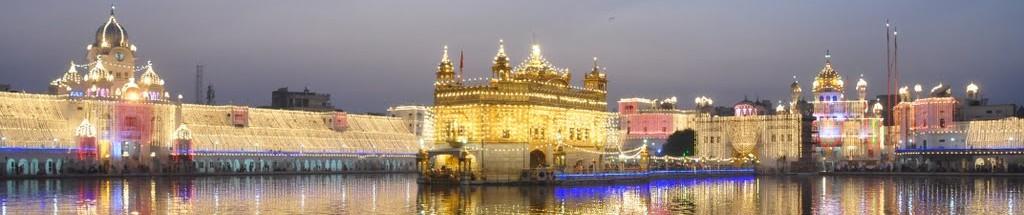
Sikhism teaches respect for other faiths, emphasizing that no one faith has a monopoly on truth. The Gurus included writings of Hindu and Muslim saints in the Guru Granth Sahib, where these lead us to more responsible living In the same spirit, Guru Arjan invited a Muslim saint, Mia Mir, to lay the foundation stone of the Darbar Sahib or Golden Temple (Amritsar), which has a door at each of its four sides to signify a welcome to all from any geographic or spiritual direction.

At the same time, our Gurus bravely criticised rituals and practices found in other faiths that take us away from religious imperatives. Importantly, even at the cost of their own lives, they opposed forced conversion and the unequal treatment of women. Voicing these uplifting teachings, would risk capture under the new government backed definition of ‘anti-Muslim hostility’. If bigots and vote-seekers wish to challenge these teachings, they should do so in open debate, not in shabby back-door definitions.  

Summary and call for action

The government attempt to secure the electoral support off Muslims by riding roughshod over the right of freedom of speech and the rights of other religions, breaks many international conventions and laws including the Universal Declaration of Human Rights and the European Convention on Human Rights. The proposed definition would have a chilling effect on open discussion of history, belief, theology, and ethical viewpoints.

Action being taken by the NSO with your support

The NSO has joined other concerned groups, (led by the Free Speech Union) to take legal action to preserve the right to freedom of belief and freedom of speech. We have setup a fundraiser via Crowdfunder with a target of £25,000, which will contribute to the legal fund for this action. We need your help to meet it. Please donate generously.

Together, we can ensure there is one law for all.

Yours sincerely,

Lord Singh of Wimbledon, Director, Network of Sikh Organisations UK

Link to Crowdfunder and QR code below:

The Free Speech Union’s pre-action letter:

Image: Esther McVey MP

Clear labelling of ritually slaughtered meat be it halal or kosher is a common-sense approach and long overdue

Earlier this week Conservative MP Esther McVey put forward a motion for leave to bring in a bill to ensure halal and kosher meat are appropriately labelled so that the public have a choice in what they are buying from supermarkets and restaurants. The Network of Sikh Organisations (NSO) welcomes the motion on grounds that clear labelling is absolutely essential for British Sikhs, who need to know exactly what they are buying as consumers, in order to adhere to the requirements of their own faith, which prohibits the consumption of any ritually slaughtered meat – with halal specifically highlighted as a prohibition in the Sikh Code of Conduct (the Sikh Rehat Maryada). This is on grounds of animal rights and preventing animal suffering, but also the belief that praying over an animal prior to its slaughter is an act of superstition. 

McVey said, ‘it is important that consumers have such information so that they can make an informed choice about what they are buying. Currently consumers do not have that information, and many are purchasing and consuming halal and kosher meat without their knowledge and agreement.’

We acknowledge that both stunned slaughter and non-stunned slaughter exists, when it comes to ritually slaughtered meat – be it kosher or halal. Most of the slaughter is stunned, and non-stun slaughter results in more suffering for the animal. Animal slaughter is regulated by assimilated EU regulation 1099/2009 and the Welfare of Animals at the Time of Killing (England) Regulations 2015. But as McVey acknowledges, ‘Under these laws, animals must be stunned before they are killed, but exemptions exist for killing without stunning in accordance with specific religious rites. Added to that, there are currently no requirements for such meat to be labelled’. 

We were not surprised to learn supermarkets like Tesco, Sainsbury’s, Asda and Marks and Spencer have sold kosher and halal without informing the consumer, but restaurants like Domino’s, Pizza Hut and KFC have done so to. Given our historical lobbying on the issue of having choice in schools, so Sikh children can have a non-halal option, we were also not surprised to learn that non-stunned meat is being used by 17 local councils in schools, many of these schools are not Islamic and parents have been none the wiser. Hospitals and local councils are also using non-stunned meat. By using such meat, the councils and public bodies in question are in breach of their responsibilities under the Equality Act 2010, and the Public Sector Equality Duty that stems from the Act.

In a response to our concerns raised about the lack of availability of non-halal meat in schools to cater for the needs of Sikh children (and others who choose not to eat it, like Hindus, and Christians) with the government back in 2018, we were informed by the then junior minister for Children and Families, Nadhim Zahawi, that the Schools Food Standards do not specify food requirements in terms of religious and cultural needs. This remains the case. 

Around the same time The Department for Environment, Food and Rural Affairs (DEFRA) told us: 

‘With regards to the availability of non-halal meat options in schools, this is a matter for the department of education..’ 

DEFRA, did, however, explain its policy in relation to ritually slaughtered animals, informing us that there were no domestic or EU regulations in place that require the labelling of halal or kosher meat, but where such information is voluntarily provided, it must be accurate for the consumer. 

The NSO therefore support McVey’s motion for leave to bring forward a bill so that labelling is not voluntary (as is the case under existing legislation), but mandatory – so that all consumers are informed and have a clear choice in what they are buying. 

Freedom of religion and conscience are important for all faiths and beliefs in Britain, and that includes the right for Sikhs (and others) as consumers, to have the right to know the meat that they are purchasing and consuming is non-halal or non-kosher.

[ENDS]

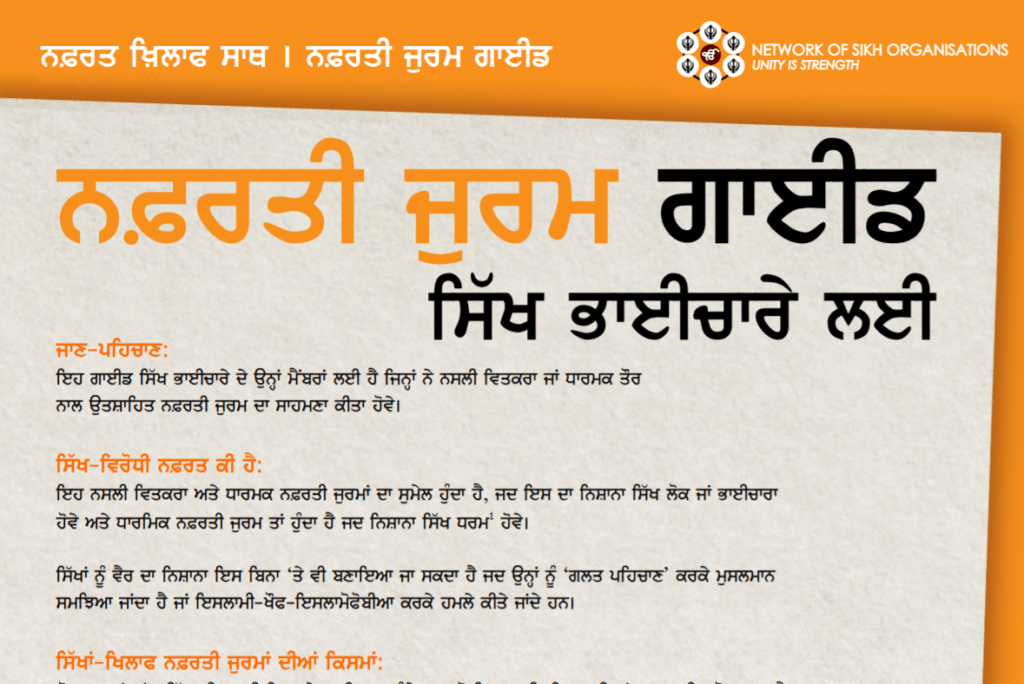
Last month we reported that we had produced hate crime guide to help signpost members of the Sikh community to organisations who can support them, as well as encouraging victims to report incidents to the police. We additionally produced a second guide designed to support organisations supporting Sikh victims.

The guides have been complied as part of a project, Together Against Hate, co-ordinated by the UK’s only specialist LGBT+ anti-violence charity Galop. The project has been funded by The Mayor’s Office for Policing And Crime (MOPAC).

Following a number of requests from gurdwaras and consultation with members of the community we have now translated the guides into Punjabi as well. We believe this step will ensure the important message of reporting incidents to the police and knowing where to get help and advice, will reach a much wider audience.

The Punjabi guide for individuals can be downloaded here:

For organisations supporting victims here:

[Ends]

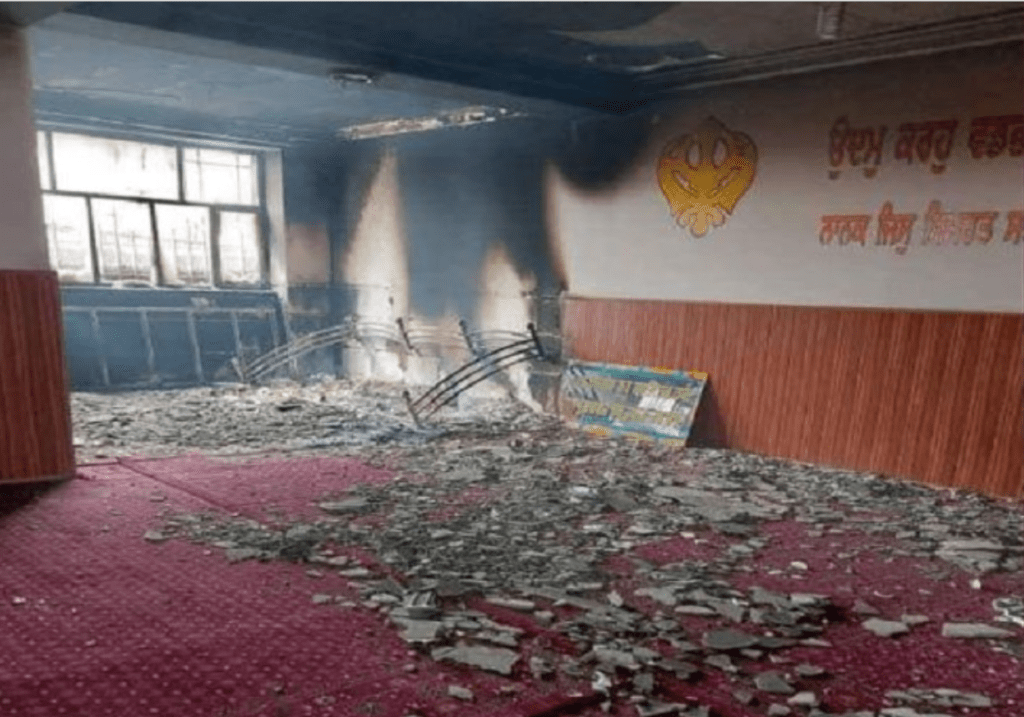
Yesterday Sikhs in Britain and worldwide woke up to the heart wrenching news of the cold-blooded murder of 25 worshippers (including one child) in a gurdwara in the Afghan capital Kabul.

Islamic State gunmen have been held responsible for the massacre of innocent worshippers, and disturbing images of the dead, along with videos of panic-stricken children sitting in a room in the gurdwara, have been widely disseminated online. The Afghan security forces were engaged in a gun battle with jihadists and helped some members of the congregation escape.

The terrorist attack against the Sikh minority is nothing new. In the summer of 2018, a suicide bomber struck a crowd of Afghan Sikhs and Hindus arriving to meet with President Ashraf Ghani as he visited the eastern city of Jalalabad, an attack that killed at least 19 people and wounded 10 others. Almost the entire Afghan Sikh and Hindu leadership were killed, including the only Sikh candidate running for election.

At the time Lord Singh our Director, tabled a written question to the government: ‘To ask Her Majesty’s Government, following the suicide bombing resulting in the death of 19 Sikhs in Jalalabad, Afghanistan in July, what representations they intend to make to the government of India to encourage it to offer asylum or safe passage to Sikhs wishing to leave Afghanistan.’

The minister’s response: ‘The British Government condemned the 1 July attack on a group of Sikhs and Hindus in Jalalabad. The Minister for Asia and the Pacific publicly described it as “a despicable attack on Afghanistan’s historic Sikh and Hindu community”. As part of NATO’s Resolute Support Mission, the UK supports the Afghan National Defence and Security Forces in its efforts to improve security for all communities in Afghanistan. NATO’s Resolute Support Mission is also assisting the Afghan National Defence and Security Forces with security planning for the upcoming elections. The UK regularly raises human rights issues with the Government of Afghanistan, including the need to protect the rights of all ethnic and religious groups in line with the constitution.’

At the time Lord Singh also asked the government whether they would provide asylum to Afghan Sikhs, to which they responded – ‘Those who need international protection should claim in the first safe country they reach – that is the fastest route to safety.’

In 2018 the Home Office put together a briefing paper highlighting the persecution of Sikhs and Hindus in Afghanistan. It cited an article that revealed, ‘prior to 1992 there were about 220,000 Hindus and Sikhs in Afghanistan with another putting that number as low as 50,000. By now, the very few remaining are concentrated in the provinces of Nangarhar, Kabul, and Ghazni’. Sikhs, Hindus and other minorities are being systematically ethnically cleansed from Afghanistan, a country Sikhs have resided in since the fifteenth century.

In response to the Kabul gurdwara massacre, we will continue to raise the targeting of Sikhs and other Afghan minorities with the government. We will also be raising the issue with members of the APPG for International Freedom of Religion or Belief as a matter of urgency.

We request Sikhs write to their MPs requesting asylum rights in the UK for Sikhs escaping genocide, and for strong UK condemnation of the attack on innocent Sikh worshipers.

For further information contact Deputy-Director Hardeep Singh at: info@nsouk.co.uk


Gurdwara Janam Asthan, Nankana Sahib, Pakistan

As Sikhs, we should recognise that those in power and authority often abuse human rights to perpetuate their authority, and see the egalitarian teachings of Sikhism with their emphasis on human rights and freedom of belief as a threat.

This was the situation in India at the time of our Gurus who incurred the active hostility of both the Mughals and the Hindu Hill Rajas. Today, the governments of India and Pakistan, while viewing Sikh teachings as a threat to Muslim or Hindu domination, are both playing on the supposed naivete of Sikhs to strengthen their positions in sub-continent rivalry. We have seen this in the overtures to Sikhs in the construction of the Kartarpur Corridor for Sikh pilgrims to Sikh heritage sites in Pakistan, and the widespread participation of the Indian government in the celebration of Guru Nanak’s 550th birth anniversary in India and many countries abroad.

Sikhs are not that naïve. India has waxed indignant about some stones thrown at the gurdwara in Nankana Sahib following an incident in which a Sikh girl apparently chose to marry a Muslim boy. Indian newspaper headlines and broadcast news has expressed outrage at the religious bigotry of Muslims, while being totally silent about the more serious destruction of a gurdwara and dozens of Sikh homes by Hindu extremists in Madya Pradesh. The Indian government has maintained a deafening silence over Hindu extremists targeting Sikhs, while actively promoting Hindu extremism in its discriminatory Citizenship Amendment Act.

Some Sikhs looking through one eye rail against the government of Pakistan. Some looking through the other eye, condemn the Indian government. The reality is that the governments of both countries are trying to manipulate Sikh sentiment for their own ends and, in the case of India, destroy our independent Sikh identity.

As Sikhs we should recognise the very real difficulties faced by Sikhs on the sub-continent. We cannot match the physical strength of either India or Pakistan, let alone both. But, through diplomacy and skill, along with adherence to our Gurus’ teachings, we can do much to reduce the hostility between India and Pakistan to the advantage of people of both countries, including Sikhs. Both countries are suffering economically in maintaining huge armies against supposed threats from the other. Both countries would gain enormously in the reduction of tension and the creating of a common economic zone. A freer movement of people would help reduce ignorance and prejudice that gives rise to religious bigotry. It is a distant dream, but it is the direction in which our Guru given guidance requires us to go.

‘Sikhs should be wary of Hinduism’s capacity to act like ‘the boa constrictor of the Indian forests’ in absorbing other faiths and beliefs.’
Max Arthur Macauliffe

India’s boast of being a secular democracy exposed as hollow

On 10th November 2019 India’s Supreme court issued a seriously flawed and politically motivated judgment granting ownership of the disputed Ayodhya Babri Masjid site to the Hindu community.

In a lengthy, judgement, the court accepted that the demolition of the mosque in 1992 had been illegal, as was the surreptitious placing of Hindu idols in the mosque in 1949 claiming that they had ‘just miraculously appeared’ and were a proof that the mosque had been built on the site of the birthplace of the Hindu god Ram. Instead, the Supreme Court anxious to implicate Sikhs in their narrative, relied heavily on fake history of the Sikh Gurus, asserting that they were Hindus and pejoratively referring to Sikhism, the 5th largest world religion as a ‘cult’, it went on to conclude that the site should go to the Hindu community.

The timing

  • The Supreme Court judgment was given on eve of the 550th anniversary of the birth of Guru Nanak and the opening of the Kartarpur Corridor from India to the Guru’s birthplace in Pakistan. The gurdwara at Katarpur Sahib and the surrounding area had been generously renovated by the Pakistan government.
  • The growing friendship between Sikhs and Muslims was seen as a threat to the BJP’s avowed aim of turning India into a Hindu State, by absorption of Sikhs into Hinduism and subduing of other minorities. Mr Modi decided to use a compliant Supreme Court to try to create suspicion and distrust between Sikhs and Muslims while at the same time relegating members of Sikhs to the status of a Hindu ‘cult’.

Absurd and biased arguments used by the Supreme Court

Fake history

  • False assertion that Guru Nanak and other Sikh Gurus made pilgrimages to Ayodhya because they were Hindus and it was an important Hindu holy site.
  • God appeared to Guru Nanak and ordered him to go to Ayodhya.

Facts

  • No historical evidence was produced to show the site was of historical importance to Hindus.
  • Guru Nanak argued against the practice of going on pilgrimages.
  • Guru Nanak rejected the Hindu faith and refused to wear the Hindu sacred thread. He also criticised central aspects of Hindu belief such as the caste system, idol worship, multiplicity of gods and goddesses. Guru Arjan wrote, ‘I am neither a Hindu, nor a Mussalman.’
  • The idea of God appearing to people is contrary to Sikh teachings which state God has no physical form.

Concluding Note

In 1990 Advani, the then president of the BJP rode through India on a truck designed like a chariot to whip up support for the Babri masjid to be converted to a mandir (Hindu temple).

The latest shenanigans of the BJP and their use of the Supreme Court to further their determination to make India a Hindu state are being watched and condemned by a wider world.

We call upon all Sikhs and people of other faiths to condemn the BJP’s attack on religious freedom. In the spirit of Guru Nanak’s teachings, we pledge to oppose all forms of religious bigotry and work for tolerance and respect for people of all faiths and beliefs.

Last week our Director Lord Singh tabled a question to the government about Foreign and Commonwealth Office (FCO) support for persecuted Christians. He asked Her Majesty’s Government, ‘what assessment they have made of the recommendations of the Bishop of Truro’s Independent Review of the Foreign and Commonwealth Office’s support for persecuted Christians.’

Minister for FCO Lord Ahmad, said the Bishop of Truro’s independent review of FCO support for persecuted Christians resulted in a series of ‘ambitious recommendations’, and that ‘we will take them forward as part of our work to support freedom of religious belief for all’. Thanking the Minister for his response Lord Singh who is also Vice-Chair for All Party Parliamentary Group (APPG) for International Freedom of Religion or Belief (FoRB) responded, ‘Sadly the appalling treatment of Christian minorities around the world is mirrored in the persecution of other religious minorities, including the appalling treatment of his Ahmadiyya community in Pakistan. In Afghanistan a once-prosperous Sikh community of more than 20,000 people has been reduced to a few hundred. Does the Minister agree that the underlying cause of religious persecution is the religious bigotry inherent in aggressive assertions that the one god of us all, way above human emotions, favours one group of humans to the exclusion of others?’

The Minister agreed with Lord Singh and was grateful for his work in this area. He said where Christians were persecuted, other minorities were likely to be persecuted as well. Other contributors to the debate included Co-Chair of APPG FoRB Baroness Berridge, Lord Anderson of Swansea, Lord Alderdice and the Lord Bishop of Ely.

Our Director Lord Singh of Wimbledon contributed to a debate on anti-Semitism secured by Baroness Berridge in the House of Lords this week.

He said, ‘I have visited Auschwitz and seen something of the horrors that thousands of Jews—innocent men, women and children—suffered. In the collective madness of the 1930s and 1940s, Jews were vilified not only in Germany but across much of Europe, including this country. As child I was frequently called a Jew by those who wished to hurt me. However, I believe that talk of a worldwide anti-Jewish conspiracy is misleading and, importantly, takes us away from the real problem which is the way in which unprincipled politicians play on ignorance and majority bigotry, regardless of the consequences suffered by others, to achieve their ends.’

Reflecting on the year we mark the 35th anniversary of the Sikh genocide in India and the persecution of Sikhs in Afghanistan today, he went on:

‘In Germany, Hitler blamed the Jews. In the India of 1984, it was the tiny Sikh minority. The killing of innocents in gas chambers is evil, but is it any more evil than dousing men, women and children with kerosene and burning them alive? In Hitler’s Germany, Jews were made to wear distinctive clothing to show their inferior status. More recently, a decimated Sikh community in Afghanistan has been made to wear distinguishing patches and to fly a yellow flag outside their homes to make them an easy target for majority bigotry. Majority bigotry knows no boundaries and, as my noble friend Lord Sacks reminded us, has no constraints.’

He added: ‘We like to believe prejudice is found in only a few. Sadly, it is far more widespread. We are all, in effect, hard-wired to be wary of difference. Unacceptable but understandable prejudice is easily manipulated to become irrational hatred. Since the Second World War, we have seen unspeakable acts of violence against targeted groups in Cambodia, Rwanda, and Bosnia, and I could go on. Special sympathy-seeking terms such as anti-Semitism or Islamophobia are understandable, but they take us away from the real problem, which is combating the more widespread bigotry suffered by all faiths. To borrow from Shakespeare, if Hindus, Muslims, Sikhs and others are cut, do we not bleed? ‘

Concluding his speech Lord Singh said, ‘Taken to an extreme, this giving of special consideration to some groups at the expense of others is, at best, unintended racism. Bigotry will continue to flourish until, in the closing words of the Sikh daily prayer, we look beyond ourselves and our group to the well-being of all members of our one human family.’

Other contributors included Lord Pickles, Lord Sacks (the former Chief Rabbi), Lord Alton and Lord Finkelstein.


A Report commissioned by the Foreign Secretary Jeremy Hunt has found that the persecution of Christians in many parts of the world amounts to what some see as near genocide. Millions of Christians have been uprooted from their homes, and many have been killed, kidnapped, imprisoned and discriminated against.

Sadly, the experience of Christians is mirrored in the experience of other faiths. Looking at my own faith, Sikhs are prohibited from opening a gurdwara in Saudi Arabia and most Middle East countries. In Afghanistan, a prosperous Sikh population of more than 20,000 has been reduced to a few hundred. Similarly, once thriving Sikh communities in Tehran and other cities in Iran, have almost disappeared without trace. Regular reports of the All Parliamentary Group for Freedom of Religion and Belief and other agencies, remind us of similar suffering of religious communities across the world.

A follow up report to examine the response of the Foreign and Commonwealth Office to growing religious persecution will be published later this summer. I do hope that this will lead to positive initiatives to counter world-wide abuse of the UN Universal Declaration of the Right to Freedom of Religion and Belief.

I feel part of the problem is a failure of religious leaders to interpret religious texts in the context of today’s very different times. Candle lit vigils and expressions of religious solidarity following an atrocity are fine, but in the Sikh view such sentiments must also be carried to our different places of worship, to replace centuries of easily exploited bigotry and misunderstanding, with emphasis on respect and tolerance for all beliefs.

Two of the Sikh Gurus gave their lives stressing the importance of inter faith understanding. Sikh believe that our different faiths are like paths up a mountain towards an understanding of God through pursuing truth, equity and justice in our daily lives. The further we go, the greater the similarity of the view ahead. Guru Arjan, our 5th Guru, included some writings of Hindu and Muslim saints in our holy scripture the Guru Granth Sahib, to emphasise that no one faith has a monopoly of truth. The freedom to practise our religion, of whatever tradition, should be similarly valued as an important universal freedom in our strife torn world.

This file is licensed under the Creative Commons Attribution-Share Alike 4.0 International license. Andrew Shiva / Wikipedia / CC BY-SA 4.0

The Network of Sikh Organisations (NSO) has requested the BBC to acknowledge a glaring omission following a segment [57:13-57:54] in its Cenotaph television coverage today in which David Dimbleby forgets to mention Sikhs amongst the 22 faith leaders in attendance for the centenary commemorations.

During the coverage of Remembrance Sunday, he said:

“There are 22 faith leaders here today”.

Dimbleby then goes through the names of faiths being represented as they appear in the footage, listing them one by one – “Christian, Jewish, Muslim, Hindu, Buddhist, Zoroastrian, Jain, Baha’i, Mormon, Humanists and Spiritualists”. He forgot to mention Sikhs, despite our Director Lord Singh’s clear presence.

The omission which may have been inadvertent, has resulted in several complaints to the NSO. Given the size of the Sikh community in Britain, as well as the fact that today’s Remembrance Sunday commemorations marks one hundred years of the end of the Great War, we believe the inordinate contribution of Sikhs deserved recognition. To illustrate why, at the outbreak of hostilities in the Great War, 20% of soldiers in the British Indian Army were Sikhs, despite comprising less than 2% of British India’s population.

In the circumstances the NSO feels the BBC should make an urgent correction.